
RuneScape: Dragonwilds Beginner Guide: Your First Hours
A step-by-step opening route, what the three survival meters really do, your first weapon and base, and how magic unlocks.

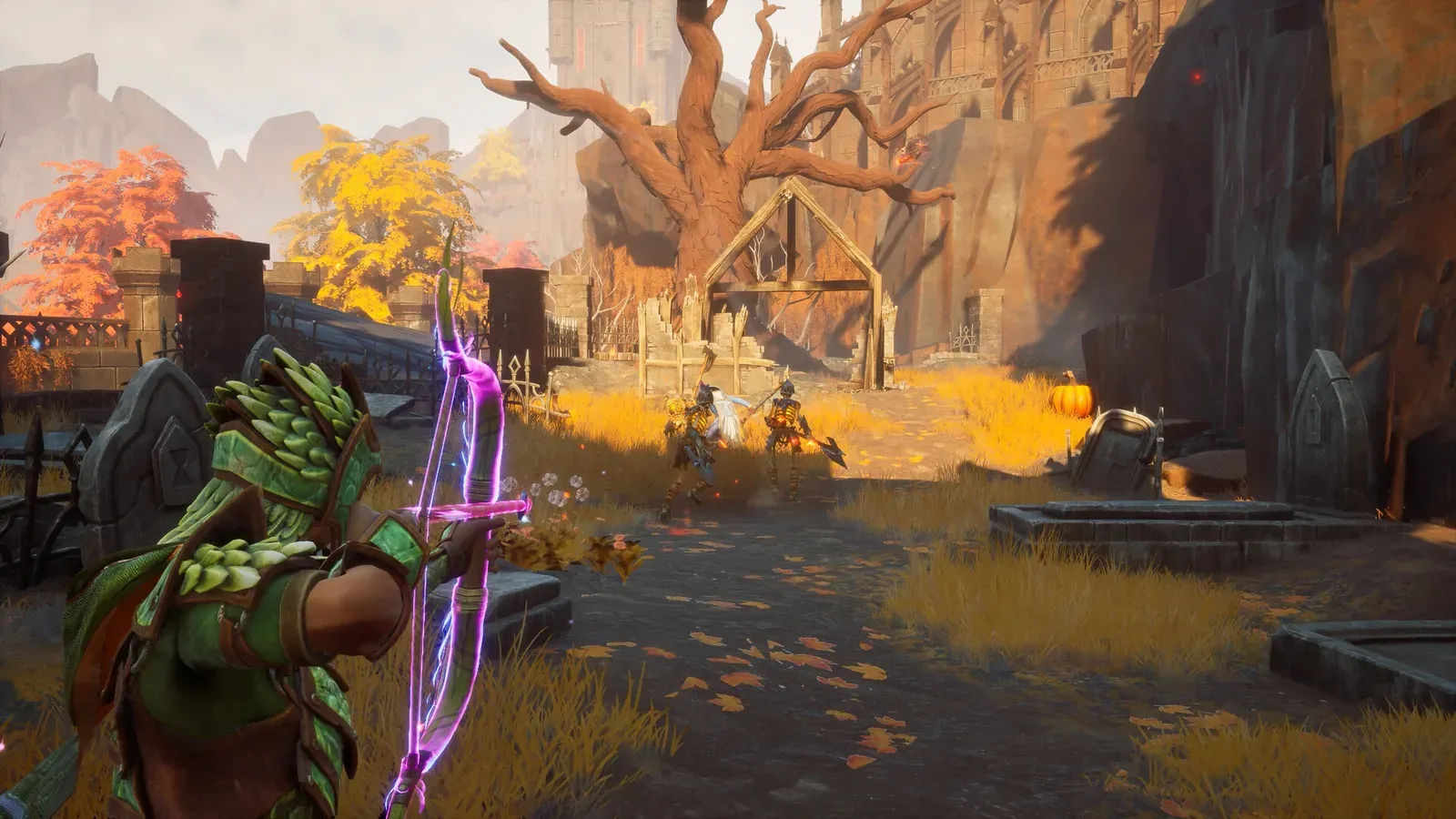
The easiest opening is a single decision: follow the old mage questline.
Collect and boil water, pick berries, craft a stone club, cook rat meat, learn runes from Zanic, then build a base with a bed near the quest route.
You do not need to explore for the first two or three hours. The questline teaches gathering, crafting, cooking, magic and building one step at a time.
Three steps at a glance
| Stage | What you do | Goal |
|---|---|---|
| Stay alive | Collect water, boil it, pick red berries | Keep hydration and sustenance off zero |
| Arm yourself | Craft a stone club, kill rats, cook the meat | A weapon and a reliable heal |
| Put down roots | Learn magic from Zanic, build a shelter with a bed | A respawn point and a rune supply |
The step-by-step order
| Step | What to do | How you know it worked | Common snag |
|---|---|---|---|
| 1 | Talk to the old mage, collect water from the marked ponds, pick red berries on the way | Clean water and food in your bag | Drinking dirty water applies a debuff, so boil it first |
| 2 | Craft a Stone Club from wood and stone | A weapon in your equipment slots | You need a crafting table placed first |
| 3 | Kill rats at the windmill, cook the meat | Edible cooked meat | Cooking fails at low levels. Burnt food is normal at first |
| 4 | Find Zanic, learn magic, mine rune essence and siphon runes | A spell appears in the skills menu and you carry runes | Floating essence stones must be knocked down first |
| 5 | Build a shelter with walls, a door, a roof and a bed | Interacting with the bed sets your respawn | The bed must be claimed. A missing roof tile means it is not enclosed |
| 6 | Continue the main questline into the next region | The questline moves you forward | Do not skip ahead. Under-levelled gear gets you killed |
What the three meters do
- Hydration drives stamina regeneration. If it runs dry, stamina will not come back, and dodging and blocking stall.
- Sustenance drives natural health regeneration. At zero you lose health continuously. On normal difficulty it stops at 1 HP rather than killing you. Hard and hardcore modes differ.
- Rest drives overall performance. Skip it for too long and everything gets worse.
Your bed gives the coziness buff, slowing the drain while you are near it and for about four minutes after you leave.
So going home to top up is mechanically rewarded.
Power Level: the one concept to remember
Your Power Level comes from the armour set you are wearing.
Mixing tiers averages the values and rounds down. One low-tier piece can drag the whole set down a step.
A skull icon next to an enemy name means it is two or more levels above you. Go back and fix your gear instead of fighting it.
For the early game specifically: complete a matching set before chasing a better single piece. That rule holds for the whole run.
Why farming and cooking are worth early attention
Food is not just a hunger bar here. It is your main healing source and your续航 for long trips.
Farming supplies steady ingredients. Cooking turns them into stronger meals and buffs.
Early on, live off what you find. Once your base is stable, start growing crops.
Solo versus co-op
- Solo: pause whenever you like, and set your own pace. Material gathering is slower at first.
- Co-op: split the work. One player chops, one mines, one farms. Progress is noticeably faster, and base building is shared.
The questline steps are identical in both modes, so this order applies either way.
Limits
- Exact drain rates for the three meters are not published. This page describes the direction only.
- “The first two or three hours” is a playtest estimate. Everyone moves at a different speed.
- Region names follow the in-game map.
Sources
- Jagex, “Our 1.0 Release is live!”: https://dragonwilds.runescape.com/news/launch (15 September 2026)
- Jagex, “Dragonwilds’ Price Isn’t Changing.”: https://dragonwilds.runescape.com/news/ea-pricing (2 September 2026)
- Official 1.0 update video, “Our Early Access Journey Is Coming to an End”: https://www.youtube.com/watch?v=HuEqe0JigCM (15 September 2026)
- Steam store page (editions, price, system requirements, review counts): https://store.steampowered.com/app/1374490/RuneScape_Dragonwilds/
- Jagex, “The RuneScape Company Expands RuneScape: Dragonwilds In Asia”: https://www.jagex.com/news/jagex-the-runescape-company-expands-runescape-dragonwilds-in-asia-through-landmark-publishing-partnerships (23 June 2026)